What Is Gap Insurance and Do You Actually Need It?

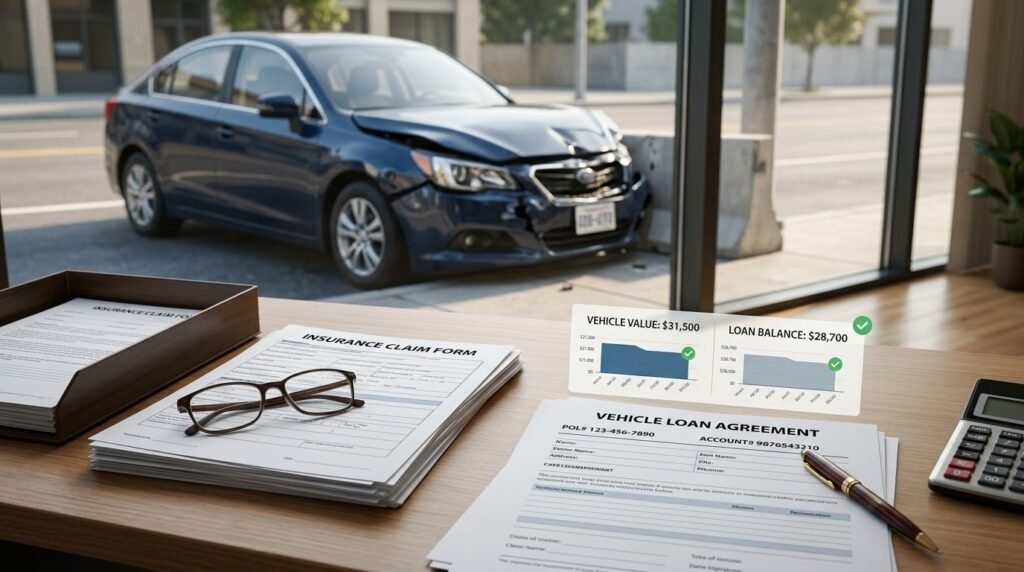
Buying or leasing a vehicle can create a financial problem that many drivers don’t discover until it’s too late: you can owe more on your car loan than your vehicle is worth.
If the vehicle is stolen or declared a total loss after an accident, standard comprehensive or collision coverage generally pays based on the vehicle’s actual cash value (ACV) rather than the remaining balance on your loan.
That’s where gap insurance comes in.
Gap insurance is designed to help cover the difference between what your insurer pays for a covered total loss and what you still owe on the vehicle, subject to the policy’s terms, limits, and exclusions.
But not everyone needs it. Here’s how gap insurance works and how to determine whether it makes sense for your situation.
What Is Gap Insurance?
Guaranteed Asset Protection, commonly called GAP insurance, is coverage designed to address the difference between a vehicle’s actual cash value and the amount remaining on an eligible auto loan or lease after a covered total loss.
For example, imagine you purchase a new vehicle for $35,000 and finance most of the purchase price.
After a year, the vehicle may be worth substantially less than its original purchase price. If you still owe $31,000 on the loan but the vehicle’s actual cash value is only $26,000, there could be a $5,000 difference.
Without applicable gap coverage, you could potentially remain responsible for that balance even though the vehicle is no longer drivable.
With qualifying gap coverage, the policy may cover some or all of the difference, depending on the contract.
What Does Gap Insurance Actually Cover?
Gap insurance generally applies when your vehicle is considered a total loss because of a covered event, such as a serious collision or theft.
Your primary auto insurance typically handles the vehicle’s covered loss first.
The basic process looks like this:
1. Your vehicle is declared a total loss.
Your insurer determines that repairing the vehicle is not economically practical under the applicable state and policy rules, or the vehicle meets the insurer’s definition of a total loss.
2. Your insurer determines the vehicle’s actual cash value.
The settlement is generally based on the vehicle’s value immediately before the loss, taking factors such as depreciation, condition, mileage, and comparable vehicles into account.
3. The insurance settlement is applied to the loan or lease balance.
If you owe more than the covered settlement amount, a remaining balance may exist.
4. Gap coverage may address the eligible difference.
The gap policy can potentially pay the covered remaining amount, subject to its terms, exclusions, deductible provisions, and maximum limits.
Example
Suppose:
- Your remaining loan balance: $28,000
- Vehicle’s actual cash value: $23,000
- Insurance settlement: $23,000
- Remaining difference: $5,000
If your gap policy covers that situation, it could potentially cover the eligible $5,000 difference.
However, gap insurance does not necessarily pay every dollar you owe. Items such as overdue payments, certain fees, warranties, negative equity rolled over from a previous vehicle, or other charges may be excluded depending on the policy.
Always check the specific contract before assuming a gap policy will eliminate your entire loan balance.
Why Does a Gap Exist?
The gap exists because vehicle depreciation and loan amortization don’t necessarily move at the same speed.
A new vehicle can lose value relatively quickly, particularly during the early years of ownership, while your loan balance may decline more gradually.
The risk can be greater when you:
- Make a small down payment
- Finance the vehicle for a long period
- Have a high-interest auto loan
- Roll negative equity from a previous vehicle into the new loan
- Purchase a vehicle that depreciates quickly
- Add taxes, fees, warranties, or other products to the amount financed
This is why someone can be making every required monthly payment and still owe more than the vehicle’s current market value.
Who Is More Likely to Benefit From Gap Insurance?
Gap insurance can be particularly relevant if you have a large potential difference between your loan balance and your vehicle’s value.
1. Buyers With a Small Down Payment
A small down payment means you begin the loan with relatively little equity in the vehicle.
If depreciation happens faster than your loan balance declines, you may quickly become “upside down” on the loan.
2. Drivers With 60-, 72-, or 84-Month Loans
Longer loan terms reduce the amount of principal paid with each monthly payment during the early stages of the loan.
That can leave you with a larger balance for longer.
3. People Who Rolled Negative Equity Into a New Loan
This is one of the situations worth paying close attention to.
If you owe $5,000 more than your old vehicle is worth and that amount is added to the financing of your next vehicle, you can start the new loan with negative equity.
4. Leased Vehicles
Gap protection is especially relevant to leases because the vehicle is not owned outright by the driver.
Some leases may include gap protection automatically, while others may require or offer it separately.
Review the lease agreement before purchasing duplicate coverage.
5. Vehicles With Rapid Depreciation
Some vehicles lose value faster than others.
If depreciation is expected to be significant, the difference between the vehicle’s value and the outstanding loan balance may remain substantial for longer.
Who May Not Need Gap Insurance?
Gap insurance isn’t automatically necessary for every vehicle owner.
You may have less need for it if:
You Made a Large Down Payment
A substantial down payment creates more initial equity and can reduce the likelihood of owing more than the vehicle is worth.
However, depreciation can still create a gap, so the down payment alone isn’t a guarantee.
Your Loan Balance Is Already Below the Vehicle’s Value
If you have positive equity, gap coverage may provide little or no financial benefit.
It’s still important to consider how quickly the vehicle’s value could decline and whether your loan balance could change relative to that value.
You Paid Cash
If you own the vehicle outright and have no qualifying loan or lease balance, traditional loan/lease gap coverage generally isn’t necessary because there is no financed balance to protect.
Your Lease or Loan Already Includes Gap Protection
Some financing agreements or leases may already provide gap protection.
Check the contract before purchasing another policy.
How Much Does Gap Insurance Cost?
The cost varies considerably depending on the provider, vehicle, financing arrangement, coverage terms, and other factors.
Gap coverage may be offered through:
- Your auto insurance company
- A dealership
- A lender or financing company
- A specialized gap provider
Instead of focusing only on the initial price, compare the total cost of coverage and what the contract actually covers.
A cheaper policy with significant exclusions or a lower maximum benefit may not provide the same protection as another policy.
Is Dealer Gap Insurance More Expensive?
It can be, but there is no universal price rule.
Dealerships may offer gap protection as part of the financing process, while insurers and lenders may offer different products at different prices.
The important step is to compare the actual coverage, exclusions, maximum benefit, cancellation rules, and total cost rather than assuming every gap product is equivalent.
Before signing your financing documents, ask for the gap contract and compare it with alternatives available through your insurer or lender.
When Should You Cancel Gap Insurance?
Gap insurance is generally most useful while you have a meaningful difference between your eligible loan or lease balance and the vehicle’s value.
Once you have built sufficient equity, continuing to pay for gap protection may no longer make financial sense.
However, don’t cancel it based solely on the age of the vehicle.
Instead, periodically compare:
Remaining loan balance vs. estimated vehicle value
If your vehicle is worth more than you owe, the traditional gap exposure may have disappeared.
Before canceling, verify:
- Your current loan balance
- Your vehicle’s current value
- Whether your policy has any cancellation restrictions
- Whether you are entitled to a refund of unused premium
- Whether the coverage is required under your lease or financing agreement
How Do You Know If You Have a Gap?
You can make a basic estimate yourself.
Step 1: Check Your Current Loan Balance
Look at your latest lender statement or online account.
Step 2: Estimate Your Vehicle’s Current Value
Compare several reputable vehicle valuation sources and, where possible, comparable vehicles in your local market.
Step 3: Compare the Two Numbers
If you owe significantly more than the vehicle is worth, you may have negative equity.
For example:
Loan balance: $27,000
Estimated vehicle value: $22,000
Potential gap: $5,000
That doesn’t automatically mean your gap policy would pay $5,000. The actual benefit depends on the policy and the terms of the total-loss settlement.
What Gap Insurance Does NOT Cover
Gap insurance is not a replacement for comprehensive or collision insurance.
It generally does not cover:
- Routine maintenance
- Mechanical breakdowns
- Normal wear and tear
- Damage that doesn’t result in a covered total loss
- Missed loan payments
- Every fee or charge included in a loan
- Personal belongings inside the vehicle
- Injuries or medical expenses
- Liability claims
The exact exclusions depend on the contract.
You should also understand that gap insurance generally works after the primary auto insurance settlement rather than replacing your regular auto insurance.
Can You Buy Gap Insurance After Buying a Car?
Sometimes.
Availability depends on the insurer, lender, vehicle, loan, and how long you have owned or financed the vehicle.
Some insurers allow customers to add gap-related coverage after purchasing a vehicle, while others impose eligibility requirements or time limits.
If you already purchased your vehicle, contact your insurer and lender and ask specifically whether gap coverage is available for your existing loan.
Is Gap Insurance Required by Law?
No. Gap insurance is generally not required by federal or state law simply because you finance a vehicle.
However, a lender or leasing company may require certain insurance coverage or gap protection under the terms of a particular agreement.
If you are leasing a vehicle, check your lease contract carefully to determine what coverage is already included or required.
Does Gap Insurance Cover a Deductible?
It depends on the policy.
Some gap products may provide a benefit toward an eligible deductible, while others may not.
Don’t assume your deductible is covered simply because you have gap insurance.
Review the policy’s definition of the covered gap amount and any deductible provisions.
Does Gap Insurance Cover a Stolen Car?
It can, if the vehicle is stolen and the theft results in a covered total loss under your primary auto insurance policy.
Typically, your comprehensive coverage would handle the theft claim first. If the resulting insurance settlement is less than the eligible loan or lease balance, gap coverage may address the qualifying difference.
The Bottom Line
Gap insurance is designed for a very specific financial risk: owing more on a vehicle than the vehicle’s covered value after a total loss.
It can be especially relevant for drivers who made small down payments, financed vehicles for long terms, rolled negative equity into a new loan, or lease vehicles.
But it isn’t automatically necessary for everyone.
The simplest way to evaluate it is to compare your remaining loan balance, current vehicle value, and the actual terms and cost of the gap policy.
If the potential financial exposure is substantial, gap coverage may provide useful protection. If you already have significant equity or your existing financing agreement includes adequate protection, purchasing additional coverage may provide little additional value.
Quick Gap Insurance Checklist
Before buying or canceling gap insurance, ask:
- How much do I currently owe?
- What is my vehicle worth today?
- How much could I potentially owe after a total loss?
- Does my existing auto policy offer gap coverage?
- Does my lease or loan already include it?
- What exclusions apply?
- Is there a maximum payout?
- Does it cover any portion of my deductible?
- Can I cancel the coverage later?
- Am I eligible for a refund if I cancel?
A few minutes comparing these details can help you avoid paying for coverage you don’t need—or discovering after a total loss that you didn’t have the protection you expected.
Frequently Asked Questions
Is gap insurance worth it?
It depends on the amount of negative equity you could have and the cost and terms of the coverage. Drivers with substantial potential negative equity generally have more exposure to the risk gap insurance is designed to address.
How long should I keep gap insurance?
Generally, until the eligible loan or lease balance is no longer meaningfully higher than the vehicle’s covered value. Check your policy before canceling.
Can I get gap insurance from my car insurance company?
Many insurers offer some form of gap-related protection, although availability and eligibility vary by company and state.
Does gap insurance pay off my entire car loan?
Not necessarily. It typically addresses an eligible difference between the primary insurance settlement and the covered loan or lease balance, subject to policy limits and exclusions.
Does gap insurance cover a totaled car?
Gap insurance does not normally pay for the vehicle itself. Your comprehensive or collision coverage generally handles the covered total loss first. Gap coverage may then address an eligible remaining balance.
Can I get gap insurance on a used car?
Possibly. Eligibility varies by insurer, lender, vehicle age, mileage, and financing terms. Check with the provider before purchasing.
Can I cancel gap insurance?
Often, yes, but cancellation rules vary. Check the policy and financing agreement and ask whether you are entitled to any refund of unused premium.
Insurance terms and coverage vary by state, insurer, lender, and contract. Always review your policy documents and confirm coverage directly with your insurance provider before making a coverage decision.